Where Safety Is the Standard

Every flight, every aircraft, and every operational decision follows a structured oversight.

Dexa Drone In The Air With Wingsupply Box

Operating as a Regulated Aviation Company

Dexa operates under a Federal Aviation Administration Part 135 Air Carrier Certificate and is listed on the U.S. Department of Transportation’s Secretary’s S-1 list. In plain terms, this means Dexa is formally recognized as a U.S. air carrier authorized to transport property for compensation under structured federal aviation oversight.

Together, these approvals place Dexa in the same regulatory category as traditional regional cargo operators, allowing operations to scale with higher regulatory credibility.

There are two parts to this recognition:

FAA Part 135 Air Carrier Certificate Requires:

An FAA-approved operations manual

Ongoing inspections and oversight

Structured pilot training programs

Outlined maintenance and safety procedures

Making Modern Drone Logistics Practical

Drones are often limited to how far they can go in order to stay within the pilot’s line of site. Dexa holds a national Beyond Visual Line of Sight (BVLOS) waiver from the FAA, allowing our drones to travel long distances without the pilot needing to physically see the drone.

The BVLOS eliminates the need for case-by-case FAA approval. Instead of applying for permission on every flight, Dexa can use this blanket approval nationwide, which offers a critical milestone for making drone delivery commercially viable. 

Dexa Flight Path

Flight Path Safety

Flight Altitude

325ft AGL (above ground level)

Flight Path

Our drones fly pre-determined routes that avoid restricted airspace, potential hazards, and sensitive areas like schools.

Delivery

We are working to enable 24/7 operations, but specific hours are dependent on partner and specific site operations.

Operating Hours and Weather Conditions

Hours: Operations are normally conducted during daylight hours, unless otherwise requested. Specific hours are dependent on the partner and operations at that site.


Weather Limitations: Operations will be suspended when there are:

  • High winds
  • Low visibility
  • Moderate to severe precipitation


Dexa currently operates under Visual Flight Rules.

How Safety Shows Up in Every Flight

Safety is ultimately defined by how systems perform in real time…in the air, across shared airspace, and under operational pressure.

Airspace Analysis

Before launching at a new site, Dexa evaluates:


  • Nearby aviation facilities
  • Local flight activity and traffic patterns
  • Airspace class and restrictions

Restricted Areas

Dexa maintains strict no-fly zones by integrating FAA-defined restrictions and monitoring flights to prevent entry into protected airspace. Temporary Flight Restrictions and other active notices are checked daily.

Automatic Dependent Surveillance - Broadcast (ADS-B)

ADS-B is like GPS navigation for the sky. Aircraft broadcast their position using a transmitter that displays their GPS location on the globe.

Flight Monitoring

Our drone is designed to complete each delivery on its own using systems and a preloaded flight plan. Our pilots step in only when necessary.

Community Engagement

Prior to operations at a new location, Dexa works with local leaders and safety organizations to discuss operations in the area and ensure leaders are aware and fully informed on how Dexa operates and its safety protocols. Dexa also engages directly with the local community through demos and Q&A sessions prior to initial operations.

Centralized Remote Operations

All future flights will be a 3:1 ratio once the FAA approves to Remote Operations Center. Right now we are 1:1.

Initial deployment targets a 3:1 aircraft-to-pilot ratio

Regulatory limits currently allow up to 40 aircraft per pilot

Three active stations can manage up to 120 aircraft at a time

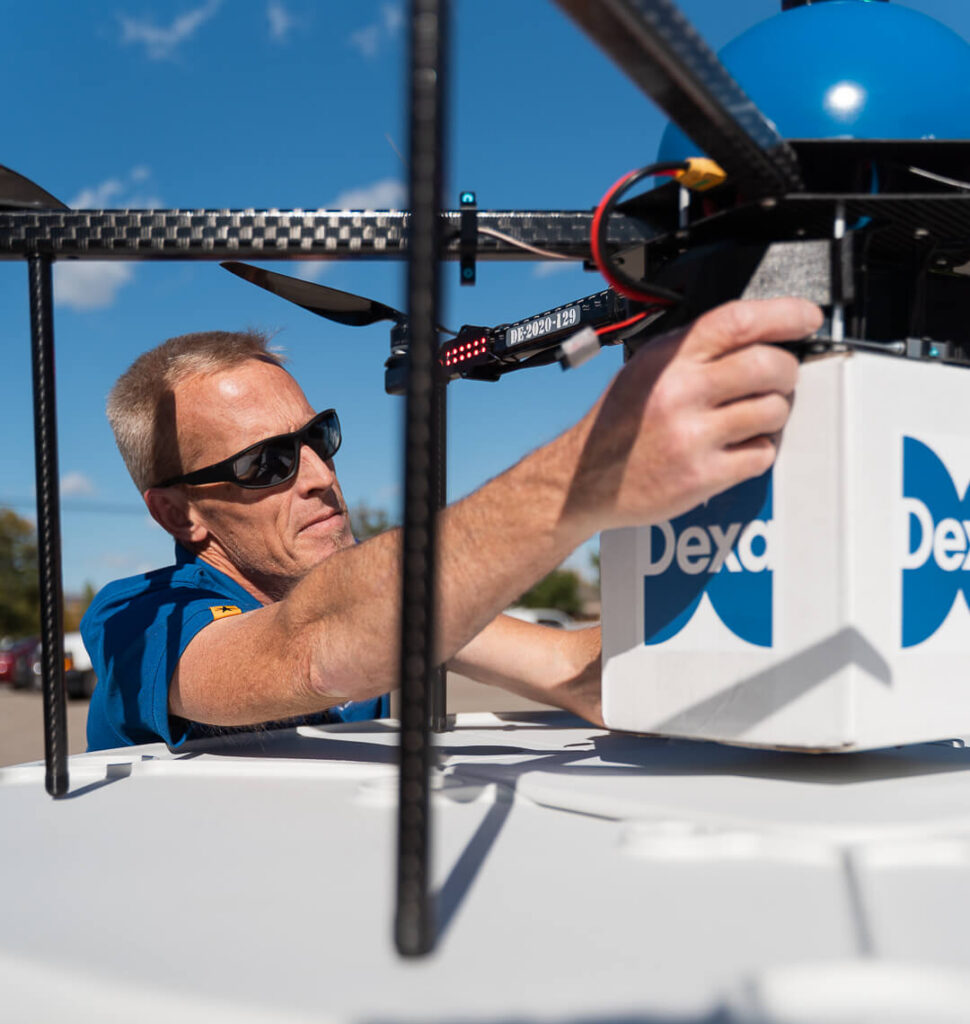
Man Loading Box On Dexa Drone

Escalation & Contingency Protocols

Dexa operations are designed to anticipate edge cases. Each aircraft operates under predefined contingency logic that includes:

Automated return-to-safe-position protocols

Mission abort procedures

Supervisor intervention capability

Controlled handoff between operators when required

Each flight is continuously monitored. If an anomaly occurs, control can be transferred immediately to a supervising operator while the primary pilot resumes monitoring nominal operations.

Drone Flying Over City

Built for Complex Airspace

Dexa’s certification, BVLOS authority, and centralized operations enable deployment in dense, shared airspace environments. Our systems are engineered to function predictably within regulated U.S. airspace while maintaining airline-level operational discipline.

Safety Architecture

Dexa’s model incorporates redundancy across multiple levels:

Safeguards

Communication

Human Oversight

Privacy

Sound

Frequently Asked Questions About
Our Safety Standards

What certifications does Dexa hold?

Dexa operates under an FAA Part 135 Air Carrier Certificate and is listed on the U.S. Department of Transportation’s Secretary’s S-1 list. This means Dexa has received both safety certification from the FAA and economic authority from the DOT to operate as a U.S. air carrier.

Flights are currently monitored on the operating site by one of our pilots. The goal is to eventually move it to our remote operations center.

Dexa aircraft are equipped with automated contingency protocols, including predefined safe responses, mission abort logic, and structured operator handoff procedures. Safety layers exist at the aircraft, communications, and operational levels.

Yes. Dexa’s Part 135 certification, BVLOS authorization, and centralized operational structure are designed to support operations within shared and complex U.S. airspace environments.

Dexa aircraft are engineered and tested to operate across a defined range of environmental conditions, including variable wind and typical seasonal weather patterns. Each mission is evaluated using real-time weather data and operational risk assessments before launch. If conditions fall outside approved safety thresholds, flights are automatically delayed or grounded.

BVLOS stands for Beyond Visual Line of Sight. Under standard drone rules, pilots must keep aircraft within direct visual range. Dexa holds a national BVLOS waiver from the FAA, allowing aircraft to operate beyond visual range under structured authorization. This approval is essential for scalable, long-distance commercial delivery.

Yes. All pilots hold FAA Part 107 certification and complete operator-specific training under Dexa’s FAA-approved program. This includes ground instruction, flight evaluations, and recurrent training.

Most commercial drone operators fly under Part 107 regulations, which limit operational scale and structure. Dexa operates under Part 135 — an airline-level certification framework requiring structured manuals, training programs, maintenance procedures, and ongoing FAA oversight.

Trusted to Operate at Scale

Winsupply Logo
Wonder Non Cursive Logo
Papa Johns Pizza Logo.wine Scaled
Microsoft Logo Scaled
Kroger Logo
Grubhub Logo
TJ Chumps Logo